Product categories
- Brands (58)
- Easy Fresh (9)
- Face Fresh (37)
- Yusma (12)
- Hair Care (1)
- HAIR OILS (1)
- Shop by Concern (53)
- Acne & Pimples (22)
- Dark Circles (7)
- Dark Spots & Pigmentation (34)
- Dull Skin & Glow (37)
- Freckles (3)
- Open Pores & Texture (14)
- Sagging & Skin Firmness (8)
- Scars & Stretch Marks (4)
- Uneven Skin Tone (26)
- Wrinkles & Anti-Ageing (20)
- Shop by Skin Type (57)
- Acne-Prone Skin (13)
- Combination Skin (28)
- Dry Skin (19)
- Mature Skin (6)
- Oily Skin (17)
- Sensitive Skin (9)
- Skincare (57)
- Skincare ingredient (54)
- Aloe Vera (19)
- Alpha Arbutin (24)
- Amla (1)
- Azelaic Acid (4)
- Collagen (5)
- Cucumber (2)
- Glutathione (15)
- Glycolic Acid (3)
- Hyaluronic Acid (19)
- Kojic Acid (20)
- Milk & Honey (10)
- Niacinamide (38)
- Retinol (3)
- Rice Water (1)
- Rose Water (4)
- Salicylic Acid (4)
- Shea Butter (6)
- Tea Tree Oil (4)
- Vitamin C (17)
- Vitamin E (25)
- Uncategorized (0)
Combination Skin
Your forehead and nose are not a different skin type. They simply hold more oil glands per square centimetre than your cheeks do.
That is the whole of it. Sebaceous glands are not spread evenly across a face — they cluster down the centre, which is why the same skin can shine at the nose and flake at the jaw on the same afternoon. You do not have two skin types. You have one face with uneven gland density, and the products need to account for that rather than fight it.
Which leads to the rule that fixes most combination-skin routines: your cheeks choose the cleanser, and your T-zone chooses everything after it.
Showing 1–16 of 28 resultsSorted by popularity
 Sale!
Sale! Sale! 36.69
 58.7238% OffAdd to cart This product has multiple variants. The options may be chosen on the product page Sale! 36.69
 58.7238% OffAdd to cart This product has multiple variants. The options may be chosen on the product page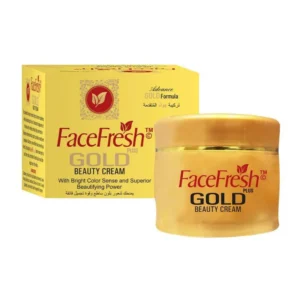 Sale! 36.69
 62.4041% OffAdd to cart This product has multiple variants. The options may be chosen on the product page Sale!
Sale! Sale!
Sale! Sale!
Sale!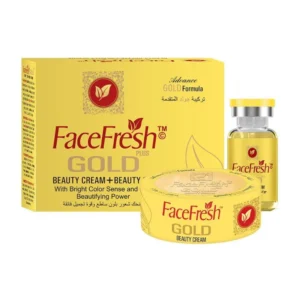 Sale!
Sale!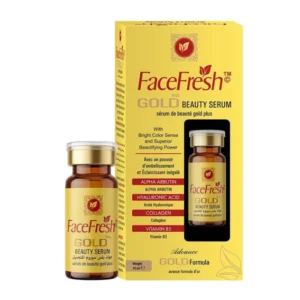 Sale! 36.69
 62.4041% OffAdd to cart This product has multiple variants. The options may be chosen on the product page Sale! 36.69
 62.4041% OffAdd to cart This product has multiple variants. The options may be chosen on the product page Sale!
Sale! Sale!
Sale! Sale!
Sale! Sale!
Sale! Sale! 22.00
 36.6940% OffAdd to cart This product has multiple variants. The options may be chosen on the product page Sale! 36.69
 58.7238% OffAdd to cart This product has multiple variants. The options may be chosen on the product page
Why the cheeks get to decide
A gentle face wash for combination skin has to work on your whole face, because that is how washing works — you cannot keep a cleanser off your cheeks while you use it on your nose. Every other product can be applied selectively. The cleanser cannot.
So it has to suit the driest part of your face, not the shiniest. Choose it for the T-zone and you spend the rest of the day repairing cheeks that did not need cleaning that hard — and tight, over-cleansed skin in the middle of the face tends to get shinier rather than calmer, so you do not even win the argument you set out to win.
Then treat the map, not the face. A drop of something oil-controlling down the centre. Something richer on the cheeks. Nothing applied everywhere just because it came in the same bag.
Which Face Fresh products fit where
- Whitening Face Wash 60ml — the cleanser to start with. It is the only sulphate-free, soap-free wash in the range, built on an amino-acid surfactant, so it clears the T-zone without stripping cheeks to get there. It barely foams and contains nothing that brightens, despite the name — here that is a feature, not a shortfall.
- Anti-Acne Ampoule 5ml — down the centre only. Niacinamide-led, no oils, no fragrance, and light enough to sit under sunscreen. Two or three drops across forehead, nose and chin is the whole application; taking it out to the cheeks is what turns a targeted product into a drying one.
- Easy Fresh Beauty Cream 18gm — for the cheeks only. Petrolatum second and beeswax third make it a sealing cream rather than a light one, which is wrong for a T-zone and right for a cheek that goes tight in air conditioning. An 18gm jar lasts a long time when it is only going on two areas.
- the Gold Plus cream-and-serum pack — if you would rather buy the split as one box. It was built around this exact problem, and its own page explains how the two pieces are meant to layer, so there is no point repeating it here.
What goes wrong with combination skin
Buying for the shine. Almost every combination-skin routine that fails was assembled by someone looking at their nose in a mirror. The nose is the loudest part of the face and the least representative.
Applying everything everywhere. A product that suits one third of your face is not improved by being spread across the other two thirds. Selective application is not fussiness — it is the only thing that makes a single routine work on two different surfaces.
Believing something will balance it. Nothing balances skin. Gland density does not change because a label says it should. What changes is what you put where, and how consistently.
Forgetting the air conditioning. In this part of the world the real swing is not summer to winter, it is indoors to outdoors — nine hours of conditioned air pulls water out of the cheeks, while heat and humidity outside drive oil in the middle. Most people here are running both conditions in the same day.
Frequently asked questions
How do I know if I have combination skin or just an oily T-zone?
They are the same thing described two ways. If your nose and forehead shine by midday while your cheeks feel tight or flake, that is combination skin — and it is the most common pattern there is.
Can I use two different washes, one for each area?
You can, but almost nobody keeps it up. One cleanser chosen for your cheeks plus selective leave-on products is easier to maintain and gets you to the same place.
Should I moisturise the T-zone at all?
Yes, lightly. Skipping moisturiser on the oily part is the most common mistake here — dehydrated skin sitting over active glands usually gets shinier, not calmer.
Why do my cheeks flake in an air-conditioned office?
Because conditioned air is dry air, and your cheeks have fewer oil glands to compensate with. Nine hours a day of it does more to them than the weather outside ever will.
Can I use a bar of soap with combination skin?
On the body, easily. On the face a bar tends to get chosen for the shiny middle and is then too much for the cheeks — which is exactly the trap this page is about.
How many products does a combination-skin routine actually need?
Three. One cleanser for the whole face, one leave-on for the T-zone and one for the cheeks. Anything beyond that is refinement rather than foundation.
Does combination skin change with age?
Often. Oil output tends to fall gradually from the mid-twenties, so a face that was oily down the middle at twenty can read as normal-to-dry at forty, with the T-zone changing last.
If I buy one thing, what should it be?
The cleanser. It is the only product that touches every part of your face, so it is the one with the most to lose if it was chosen for the wrong area.