Product categories
- Brands (58)
- Easy Fresh (9)
- Face Fresh (37)
- Yusma (12)
- Hair Care (1)
- HAIR OILS (1)
- Shop by Concern (53)
- Acne & Pimples (22)
- Dark Circles (7)
- Dark Spots & Pigmentation (34)
- Dull Skin & Glow (37)
- Freckles (3)
- Open Pores & Texture (14)
- Sagging & Skin Firmness (8)
- Scars & Stretch Marks (4)
- Uneven Skin Tone (26)
- Wrinkles & Anti-Ageing (20)
- Shop by Skin Type (57)
- Acne-Prone Skin (13)
- Combination Skin (28)
- Dry Skin (19)
- Mature Skin (6)
- Oily Skin (17)
- Sensitive Skin (9)
- Skincare (57)
- Skincare ingredient (54)
- Aloe Vera (19)
- Alpha Arbutin (24)
- Amla (1)
- Azelaic Acid (4)
- Collagen (5)
- Cucumber (2)
- Glutathione (15)
- Glycolic Acid (3)
- Hyaluronic Acid (19)
- Kojic Acid (20)
- Milk & Honey (10)
- Niacinamide (38)
- Retinol (3)
- Rice Water (1)
- Rose Water (4)
- Salicylic Acid (4)
- Shea Butter (6)
- Tea Tree Oil (4)
- Vitamin C (17)
- Vitamin E (25)
- Uncategorized (0)
Sensitive Skin
Most reactions are not caused by one product. They are caused by four.
People searching for the best soap for sensitive skin usually have a bar in one hand and three other products in the cupboard, and the bar is rarely the thing that tipped them over. Irritation is dose-dependent. It adds up across a routine, not within a single tube — which is why a soap, a cream, a serum and a lotion can each be perfectly mild and still leave your face stinging by Thursday.
This matters more with a brightening range than with most. Kojic acid dipalmitate, alpha arbutin, glutathione and niacinamide appear across Face Fresh soaps, creams, serums and lotions, and several creams add lactic, glycolic, salicylic or azelaic acid on top. Use four products from the range and you can hit the same pathway four times a day without ever reading a warning.
Showing all 9 resultsSorted by popularity
 Sale!
Sale! Sale!
Sale! Sale!
Sale! Sale!9.99$
15.99$38% OffAdd to cart This product has multiple variants. The options may be chosen on the product page Sale!5.99$
9.99$40% OffAdd to cart This product has multiple variants. The options may be chosen on the product page Sale!
Sale!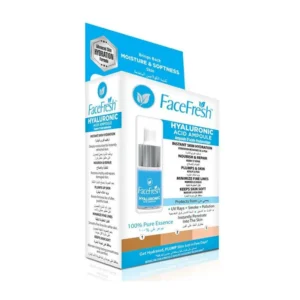 Sale!
Sale! Sale!19.99$
29.99$33% OffAdd to cart This product has multiple variants. The options may be chosen on the product page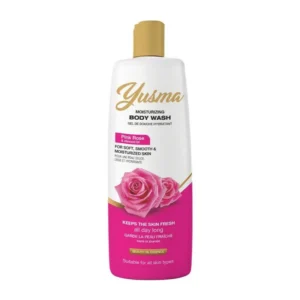 Sale!19.99$
29.99$33% OffAdd to cart This product has multiple variants. The options may be chosen on the product page
Irritation and allergy are not the same problem
Irritation is a dose response. Less product, fewer products, or a shorter contact time all reduce it, and it usually shows up as stinging, warmth or tightness within minutes of applying something. It is the common one, and it is fixable by subtraction.
Allergy is an immune reaction and behaves differently: it tends to appear a day or so later, it does not care how little you used, and once your skin has decided, small amounts will not be tolerated either. If a product gives you swelling, spreading redness or bumps that arrive the next morning, stop it entirely rather than trying a smaller amount.
Almost everything sold as being for sensitive skin is aimed at the first problem. That is fine — the first problem is the one most people have — but it means the useful question is how much your routine is carrying in total, not which single product is gentlest.
Do the routine audit first
Write down everything that touches your face in a day, then mark the ones that stay on. Rinse-off products get a minute at most; leave-on products get hours, so they carry most of the load. The rule that fixes most reactive skin is one leave-on active at a time — one brightening cream or one brightening serum, not both, and not a third acid on top at night.
Then look at fragrance, honestly. Fragrance is the most common single cause of cosmetic contact allergy, and almost every cream, soap, face wash and lotion in the Face Fresh range lists fragrance or perfume. The exceptions are the ampoules: most of them list none at all, though the Collagen Booster Ampoule does contain fragrance and the White Rice Ampoule lists an essence. If you suspect fragrance is your trigger, that is the only part of the range currently built without it.
Which Face Fresh products carry the least
- Cleanser Soap 100gm — a gentle soap for sensitive skin with nothing in it trying to change your skin. Coco betaine leads the list and sodium palmate sits fifth, so most of the cleaning is done by a mild surfactant rather than by soap, and there is no kojic acid, no arbutin and no glutathione anywhere in it.
- Whitening Face Wash 60ml — the only sulphate-free, soap-free cleanser in the whole line-up, built on an amino-acid surfactant with two amphoterics. It barely foams, which is the point. It also contains nothing that brightens, so it is a cleansing step and nothing more.
- Yusma Face & Body Whitening & Moisturizing Cream 225gm — the plainest face cream for sensitive skin in the range. Six of its thirteen ingredients are structure, and niacinamide is the only thing in it acting on tone, which makes it a far lighter load than the multi-active jars. It does contain fragrance and parabens.
- Vitamin C Ampoule 5ml — a brightening serum for sensitive skin that uses 3-O-ethyl ascorbic acid, a stable vitamin C derivative, with no acid, no retinol and no fragrance on the list. Vitamin C can still sting compromised skin, so patch test it along the jaw before it goes anywhere near your cheeks.
- Moisturizing Beauty Lotion — a face lotion for sensitive skin in the sense that matters here: it carries no tone actives at all. It seals rather than treats, which is exactly what skin recovering from a reaction wants. Fragrance is on the list.
What 'natural' does and does not tell you
Searches for a natural soap for sensitive skin are really searches for a short ingredient list, and the instinct behind them is sound even though the word is not. Natural is not a regulated term and it does not predict tolerance. Lemon, lime, cinnamon and several essential oils are entirely natural and sit among the more common causes of irritation and contact allergy; petrolatum is synthetic, inert and one of the least reactive things you can put on damaged skin.
What actually helps is fewer ingredients doing fewer jobs. Read the list, count the actives, and judge a product on that rather than on the picture on the front.
Frequently asked questions
How do I tell irritation from an allergy?
Irritation is dose-dependent — less product means less reaction, and it usually stings within minutes. An allergy is closer to all-or-nothing, often appears a day later, and does not improve with a smaller amount.
How long should I wait between introducing products?
Two weeks per new product. It feels slow, but if you add three things in one week and your skin objects, you have no way of knowing which one to drop.
Can I use a brightening routine at all if my skin reacts easily?
Usually yes, with one leave-on active at a time. The problem is rarely a single product — it is a soap, a cream, a serum and a lotion all carrying versions of the same thing.
Where should I patch test, and for how long?
Along the jaw or behind the ear, twice a day for five days. The inner arm is convenient but its skin is thicker and less reactive, so it can pass something your cheeks will not.
Why does my skin only sting when I use two products together?
Because the dose adds up. Two mild products carrying the same acid or the same brightening agent deliver twice as much, and skin responds to the total rather than to each label.
Does hard water make sensitive skin worse?
It can. Hard water leaves mineral and soap residue behind that keeps working after you have towelled off. If your face feels filmy or tight after washing, suspect the water before the bar.
Is fragrance always the culprit?
No, but it is the most common single one in cosmetics. It is worth ruling in or out early, and in this range that means testing the ampoules, which are mostly built without it.
Everything has been irritating me. Where do I restart?
With two products: a bar carrying no actives, and a plain moisturiser. Give it two quiet weeks, then add one brightening step and hold it another fortnight before adding anything else.
Where to start
Take the routine down to a cleanse and a moisturiser for a fortnight, then rebuild it one product at a time. If a specific bar is what you came for, the comparison of every Face Fresh soap side by side will get you there faster than reading four product pages. And if your skin is reactive because it is also dry rather than because of what you are applying, that is a different problem with a different answer — start with the products built for skin that is short of oil instead.