Product categories
- Brands (58)
- Easy Fresh (9)
- Face Fresh (37)
- Yusma (12)
- Hair Care (1)
- HAIR OILS (1)
- Shop by Concern (53)
- Acne & Pimples (22)
- Dark Circles (7)
- Dark Spots & Pigmentation (34)
- Dull Skin & Glow (37)
- Freckles (3)
- Open Pores & Texture (14)
- Sagging & Skin Firmness (8)
- Scars & Stretch Marks (4)
- Uneven Skin Tone (26)
- Wrinkles & Anti-Ageing (20)
- Shop by Skin Type (57)
- Acne-Prone Skin (13)
- Combination Skin (28)
- Dry Skin (19)
- Mature Skin (6)
- Oily Skin (17)
- Sensitive Skin (9)
- Skincare (57)
- Skincare ingredient (54)
- Aloe Vera (19)
- Alpha Arbutin (24)
- Amla (1)
- Azelaic Acid (4)
- Collagen (5)
- Cucumber (2)
- Glutathione (15)
- Glycolic Acid (3)
- Hyaluronic Acid (19)
- Kojic Acid (20)
- Milk & Honey (10)
- Niacinamide (38)
- Retinol (3)
- Rice Water (1)
- Rose Water (4)
- Salicylic Acid (4)
- Shea Butter (6)
- Tea Tree Oil (4)
- Vitamin C (17)
- Vitamin E (25)
- Uncategorized (0)
Glycolic Acid
A face cream with 10 glycolic acid is not automatically stronger than a cream with five per cent. That sounds like a trick, and it is not. Percentage tells you how much acid went into the pot; pH tells you how much of it is still in the acidic form that does anything to skin.
Search the phrase and you will get nine products with the number on the front. Exactly one of them prints its pH. This page explains why the second number is the one that decides the result, what glycolic acid is actually doing while it is there, and how to judge a cream when — as is true of ours — neither number is printed at all.
Showing all 3 resultsSorted by popularity
 Sale!9.99$
16.99$41% OffAdd to cart This product has multiple variants. The options may be chosen on the product page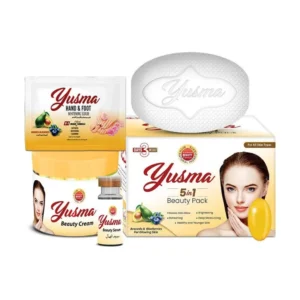 Sale!
Sale!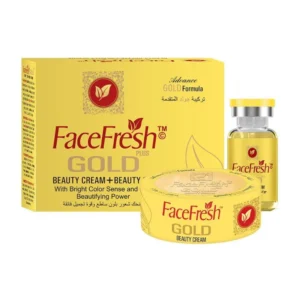 Sale!
Sale!
What glycolic acid does
Glycolic acid is the smallest of the alpha hydroxy acids, which is why it moves through the outer layer more readily than lactic or mandelic acid. Our Gold Plus Beauty Cream page covers that size advantage and what it means when three acids share one jar.
Its main job is to weaken the glue holding dead cells together at the surface, so the layer sheds evenly rather than in patches. Over weeks that produces the smoother, more reflective surface people describe as glow. It is the same mechanism whether it appears in a cream, a scrub or a peel — only the contact time and the strength change.
Why 10% is only half the number
Glycolic acid exists in two states in a formula. In its free acid form it is active. Once neutralised into a glycolate salt, it is not. Which state it sits in is decided by the pH of the product.
So a cream at ten per cent buffered up to pH 4.5 can have less free acid available than a cream at five per cent held at pH 3.5. The number on the front is a recipe quantity, not a strength. This is why two products with identical percentages can feel completely different on skin, and why the one time a brand prints its pH is usually the time it has something to be proud of.
There is a second reason not to shop on the number alone. A high percentage in a rich, occlusive base behaves differently from the same percentage in a thin gel, because the base decides how much of the acid ever reaches skin and how long it stays there.
Ask for the pH, not just the percentage. A brand that knows one usually knows the other.
Judge by your skin in the first fortnight. Mild tingling that fades within a minute is the working range. Stinging that lasts, or tightness the next morning, means too strong or too often.
Change one thing at a time. If you start an acid and a retinoid in the same week you will not know which one to blame or thank.
The part nobody mentions: it also holds water
Glycolic acid is a small, water-loving molecule, and part of what it does on skin has nothing to do with exfoliation. It binds water, the way glycerin does.
That explains something people find confusing. A good glycolic product often makes skin look better on the first morning, long before any meaningful cell turnover has happened. That early result is hydration. The exfoliating result arrives over three to six weeks and looks different — more even tone, fewer rough patches, a surface that takes makeup without clinging.
Knowing which effect you are looking at stops you giving up on a product at week two, and stops you overusing one because the instant version felt so good.
Glycolic acid in a scrub is a different proposition
A glycolic acid body scrub combines two exfoliating methods in one step: the acid working chemically, and the grains working physically. That is more aggressive than either alone, and it needs a lighter hand rather than a firmer one.
The Yusma Hand & Foot Whitening Scrub is built this way, with walnut shell providing the abrasion. On knuckles, heels and knees — thick skin that genuinely needs it — that combination is well suited. On a face, on the neck, or anywhere already irritated, it is not.
The practical rule with any scrub carrying an acid: let the product do the work, use no pressure, and do not use it in the same week as an acid cream on the same area.
Sun sensitivity is not optional here
Alpha hydroxy acids increase skin's sensitivity to ultraviolet light, and glycolic acid does so more than most because it penetrates furthest. This is not a legal disclaimer, it is the reason some people finish a course of acids with worse pigmentation than they started with.
Use it at night. Wear broad-spectrum sun protection during the day, every day you are using it and for at least a week after you stop. In this region that means a real sunscreen, not a cream containing a UV filter — several Face Fresh creams contain one, none has a tested rating, and none should be relied on for this.
Which Face Fresh product fits
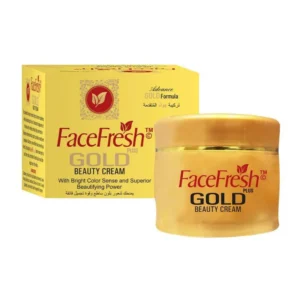
Face, leave-on, at night — the Gold Plus Beauty Cream, which carries glycolic acid alongside salicylic and azelaic acid. Twice weekly to begin with.
Hands, feet, knees and elbows — the Yusma Hand & Foot Whitening Scrub. Once a week is plenty.
A gentler introduction inside a routine — the Yusma 5 in 1 Beauty Pack, where the glycolic acid sits in the serum rather than the cream, so the dose arrives in a thinner layer.
Pore blockage rather than surface texture — glycolic is the wrong acid. See the salicylic acid page, which explains why oil solubility changes where an acid can reach.
The honest limitation is the one this whole page is built around: no Face Fresh product prints a glycolic acid percentage or a pH, so we cannot tell you these are ten per cent creams and we are not going to imply it. Judge them the way the section above describes — by how your skin responds in the first two weeks — and if a declared number is essential to you, buy a product that declares one.
FAQs
Is 10% glycolic acid strong?
It can be. It depends on the pH, the base and how often you use it. A well-buffered ten per cent cream can be gentler in practice than a badly formulated five per cent one.
What pH should a glycolic product be?
Most effective leave-on products sit between pH 3.5 and 4. Below that, irritation rises faster than benefit. Above about 4.5, much of the acid is neutralised and doing little.
Can I use glycolic acid every day?
Some people can, most should not need to. Two or three nights a week gives nearly all the benefit with much less risk of the barrier damage that shows up as tightness and stinging.
Does glycolic acid lighten skin?
It evens tone by shedding pigmented surface cells faster, which makes marks fade sooner. It does not change your natural colour, and no acid does.
Why does my skin sting for a moment when I apply it?
That is the acid contacting skin and is normal if it fades within a minute or two. Stinging that persists, or redness the following morning, means you are using too much too often.
Is body skin more tolerant of acids than facial skin?
Generally yes — it is thicker and has fewer nerve endings near the surface. The exceptions are the neck, the inner arm and anywhere freshly shaved or waxed, which all behave like facial skin.
Is glycolic acid safe with niacinamide?
Yes. The old warning came from a laboratory scenario that does not reflect finished products. If you want to be cautious, put them at different ends of the day.
When does the exfoliating effect actually start?
Around three to six weeks of consistent use. Anything you notice in the first few days is the water-binding effect described above, which is pleasant but disappears the moment you stop.
For face use, the Gold Plus Beauty Cream is where glycolic acid does the most work in this range. Two nights a week, and sunscreen the next morning.