Product categories
- Brands (58)
- Easy Fresh (9)
- Face Fresh (37)
- Yusma (12)
- Hair Care (1)
- HAIR OILS (1)
- Shop by Concern (53)
- Acne & Pimples (22)
- Dark Circles (7)
- Dark Spots & Pigmentation (34)
- Dull Skin & Glow (37)
- Freckles (3)
- Open Pores & Texture (14)
- Sagging & Skin Firmness (8)
- Scars & Stretch Marks (4)
- Uneven Skin Tone (26)
- Wrinkles & Anti-Ageing (20)
- Shop by Skin Type (57)
- Acne-Prone Skin (13)
- Combination Skin (28)
- Dry Skin (19)
- Mature Skin (6)
- Oily Skin (17)
- Sensitive Skin (9)
- Skincare (57)
- Skincare ingredient (54)
- Aloe Vera (19)
- Alpha Arbutin (24)
- Amla (1)
- Azelaic Acid (4)
- Collagen (5)
- Cucumber (2)
- Glutathione (15)
- Glycolic Acid (3)
- Hyaluronic Acid (19)
- Kojic Acid (20)
- Milk & Honey (10)
- Niacinamide (38)
- Retinol (3)
- Rice Water (1)
- Rose Water (4)
- Salicylic Acid (4)
- Shea Butter (6)
- Tea Tree Oil (4)
- Vitamin C (17)
- Vitamin E (25)
- Uncategorized (0)
Acne-Prone Skin
Acne-prone is a tendency, not a state. Most of the time, your skin is not breaking out.
That gap is where the routine actually gets decided, and it is the part almost nobody buys for. People assemble a whole shelf during a bad fortnight — the strongest wash, the strongest spot treatment, no moisturiser because it feels wrong — and then keep using all of it through the three clear weeks that follow. Skin treated as though it is mid-breakout every single day ends up stripped, slower to heal and still breaking out.
It is also how someone with oily, acne-prone skin ends up six months later searching for a face wash for dry acne prone skin. The skin type did not change. The routine did it.
Showing all 13 resultsSorted by popularity
 Sale!
Sale! Sale!7.99$
13.99$43% OffAdd to cart This product has multiple variants. The options may be chosen on the product page Sale!
Sale!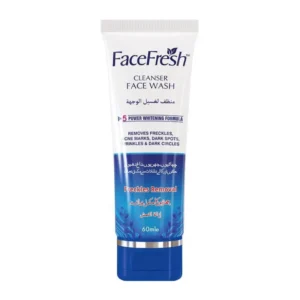 Sale!
Sale! Sale!5.99$
9.99$40% OffAdd to cart This product has multiple variants. The options may be chosen on the product page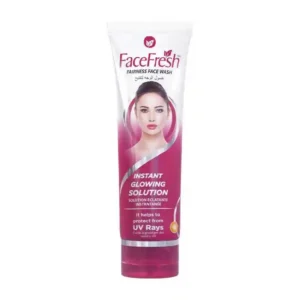 Sale!
Sale!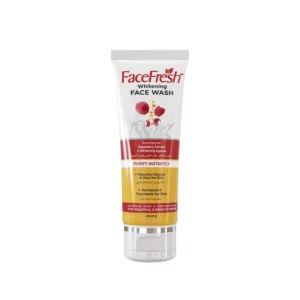 Sale!
Sale! Sale!
Sale!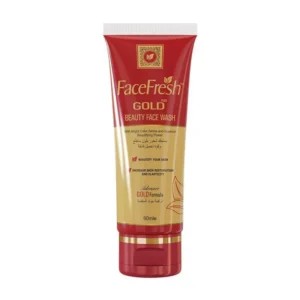 Sale!
Sale! Sale!
Sale! Sale!
Sale!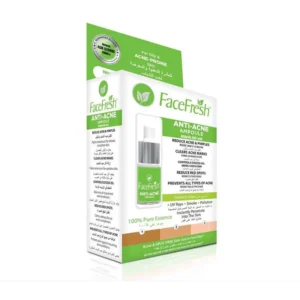 Sale!
Sale! Sale!
Sale!
The clear-week test
Write down what you used on the last day nothing was wrong. Not what you use when you can feel something coming — what actually went on your face on a quiet Tuesday. That list is your real routine, it is what your skin experiences for most of the year, and it is the only part worth optimising.
If that list contains a stripping wash, a drying leave-on and no moisturiser, you are running breakout-week settings full time. Two of those three usually need to come out.
What to look for in a daily wash
The best face wash for oily acne prone skin is not the strongest one — it is the one you could use twice a day for a year without your skin objecting. Judge it on what your face feels like an hour later rather than on how clean it feels in the shower. Tightness is not a result. It is a warning.
Beyond that, the useful features are unglamorous: it should remove sunscreen and sweat properly, it should not need scrubbing, and it should suit whichever way your skin currently leans. Two people can both be acne-prone and need opposite cleansers.
Which Face Fresh products fit acne-prone skin
- Cleanser Face Wash 60ml — for skin that is oily and marks easily. It is the only Face Fresh wash with salicylic acid in it, sitting low in the list next to kojic acid dipalmitate and alpha arbutin, which makes it a sensible everyday cleanse aimed at the marks left behind rather than at the spot itself.
- Whitening Face Wash 60ml — for acne-prone skin that has gone dry or tight. Sulphate-free, soap-free and built on an amino-acid surfactant, it is the mildest cleanser in the range and the right reset if a stronger wash has left your face feeling stripped.
- Anti-Acne Ampoule 5ml — the clear-week leave-on. Niacinamide sits second after water, with no oils and no fragrance, so it controls oil and calms redness. It contains no salicylic acid, no benzoyl peroxide and no retinoid, so it is not a treatment for an active breakout, and it is honest about that.
- Hyaluronic Acid Ampoule 5ml — the best hyaluronic acid serum for oily skin in this range, and the reason a drying routine stops backfiring. Nine ingredients, no oil, no fragrance. It hydrates and does nothing to a spot, which is exactly the job it is there for.
What makes acne-prone skin worse
Stacking. A strong wash plus a strong leave-on in the same week is twice the load on a barrier that is already inflamed, and the two rarely act on the same thing anyway.
Stopping the moisturiser. This is the most common self-inflicted injury on acne-prone skin. Dry skin does not break out less; it heals more slowly and marks more heavily, so a two-week breakout leaves three months of brown patches instead.
Changing everything at once. If four things change and your skin improves, you have learned nothing and cannot repeat it. One change, held for eight weeks.
Picking. The spot is a matter of days; the mark it leaves can run for months, and on medium and deep skin tones post-inflammatory pigmentation is both more visible and slower to clear. Almost every long-lasting mark started as a short-lived spot that got interfered with.
Frequently asked questions
Is acne-prone skin the same as oily skin?
No. Oily describes how much sebum you produce; acne-prone describes how readily a pore blocks and inflames. Plenty of people are one without the other, which is why one wash cannot suit both.
My skin is acne-prone but dry. What changes?
The cleanser, mostly. That combination usually comes from using breakout-week products every day. A sulphate-free wash and a light hydrating layer fixes most of it within a month.
How long should I give a new routine before judging it?
Eight to twelve weeks, changing one thing at a time. A blocked pore takes weeks to form and weeks to settle, so four weeks tells you about tolerance rather than results.
Should I use a scrub on acne-prone skin?
Not on inflamed areas. Grains and brushes spread bacteria and break the surface of a spot, which is how a mark that would have faded in weeks turns into one that lasts months.
Do I need to stop moisturising during a breakout?
No, and doing so usually turns a short breakout into a long one. Stripped skin heals more slowly and marks more heavily. Keep it light, and keep it going.
Why do the marks last longer than the spots?
Because they are two different injuries. The spot is inflammation and settles in days; the brown mark is pigment left behind by it, and on deeper skin tones that can take months to fade.
What should I do about breakouts on my back and chest?
Shower soon after sweating, rinse conditioner off your back before you leave the shower, and use a plain bar rather than a facial wash — the area is far too large for a 60ml tube.
When is the Anti-Acne Ampoule not enough?
When spots are painful, deep, or leaving scars rather than marks. There is no benzoyl peroxide, salicylic acid or retinoid in it, so persistent cystic acne needs a pharmacist or a dermatologist.
Where to start
Fix the clear-week routine first: one cleanser you can tolerate twice a day, one light hydrating layer, and one leave-on. Give it eight weeks before you judge it. If you are in the middle of a breakout right now and want to know what actually helps during one, that is a different question with its own answer — start with the page on what to do about active spots and pimples. If shine rather than breakouts is your main complaint, the routine for skin that is simply oily is the shorter read.