Product categories
- Brands (58)
- Easy Fresh (9)
- Face Fresh (37)
- Yusma (12)
- Hair Care (1)
- HAIR OILS (1)
- Shop by Concern (53)
- Acne & Pimples (22)
- Dark Circles (7)
- Dark Spots & Pigmentation (34)
- Dull Skin & Glow (37)
- Freckles (3)
- Open Pores & Texture (14)
- Sagging & Skin Firmness (8)
- Scars & Stretch Marks (4)
- Uneven Skin Tone (26)
- Wrinkles & Anti-Ageing (20)
- Shop by Skin Type (57)
- Acne-Prone Skin (13)
- Combination Skin (28)
- Dry Skin (19)
- Mature Skin (6)
- Oily Skin (17)
- Sensitive Skin (9)
- Skincare (57)
- Skincare ingredient (54)
- Aloe Vera (19)
- Alpha Arbutin (24)
- Amla (1)
- Azelaic Acid (4)
- Collagen (5)
- Cucumber (2)
- Glutathione (15)
- Glycolic Acid (3)
- Hyaluronic Acid (19)
- Kojic Acid (20)
- Milk & Honey (10)
- Niacinamide (38)
- Retinol (3)
- Rice Water (1)
- Rose Water (4)
- Salicylic Acid (4)
- Shea Butter (6)
- Tea Tree Oil (4)
- Vitamin C (17)
- Vitamin E (25)
- Uncategorized (0)
Shea Butter
In every shea butter body lotion on our shelf, the ingredient holding water into your skin is not the shea. It is petrolatum, or mineral oil, or paraffin wax — usually all three, and usually near the top of the list.
That is not a scandal and it is not an argument against shea. It is a description of what shea butter is good at, which is softness, slip and the way a lotion feels going on. Confusing that with sealing is how people end up buying an expensive lotion for dry skin that does not fix dry skin. This page separates the two jobs.
Showing all 6 resultsSorted by popularity
 Sale!
Sale!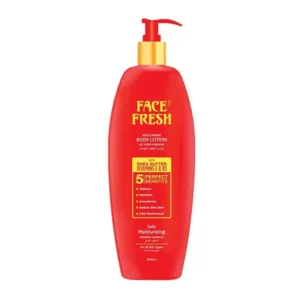 Sale!19.99$
29.99$33% OffAdd to cart This product has multiple variants. The options may be chosen on the product page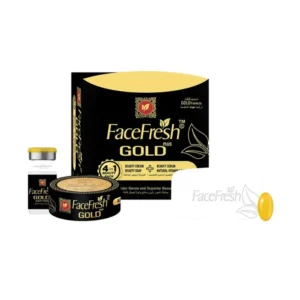 Sale!
Sale!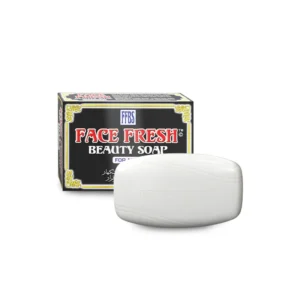 Sale!
Sale!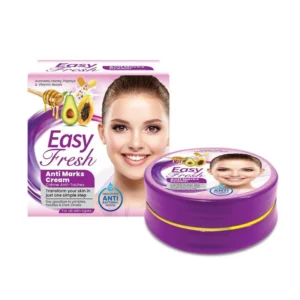 Sale!
Sale!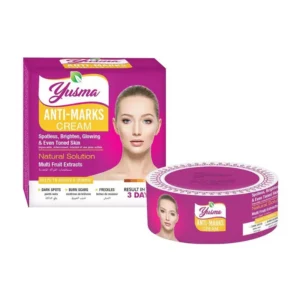 Sale!
Sale!
What shea butter is made of
Shea butter is the fat pressed from the nut of the West African shea tree. Roughly eighty-five to ninety per cent of it is ordinary triglycerides, and what makes it unusual is the balance: stearic acid and oleic acid in near-equal parts.
That balance is why it behaves the way it does. Stearic acid is solid at room temperature, which gives you the firm butter in the jar. Oleic acid is liquid, which is why it melts on contact with skin instead of staying waxy. Most plant butters lean one way or the other; shea sits between them, and that is the whole reason it feels the way it does.
The remaining fraction — the part that is not triglyceride — is where shea's more interesting compounds sit. Our Face Fresh Body Lotion page covers what that fraction contains and why it is the reason shea is treated as more than a plain fat.
Emollient, not occlusive — and why that matters when you shop
Moisturisers do three separate things, and shea only does one of them well.
- Humectants draw water into the outer layer. Glycerin, propylene glycol, hyaluronic acid, panthenol.
- Emollients fill the gaps between surface cells so skin feels smooth and flexible. This is shea's job, and it is very good at it.
- Occlusives form a barrier that stops water leaving. Petrolatum, mineral oil, paraffin, beeswax, dimethicone.
Shea does have a mild occlusive effect — any solid fat does — but it is a fraction of what petrolatum achieves, and no formulator relies on it. So in practice shea is always being carried. There is always something else in the bottle doing the heavy work, and it is almost always one of the ingredients marketing has taught people to be suspicious of.
If your skin is dry because it is losing water, the occlusive is the ingredient that fixes it. If your skin is rough and uncomfortable but not actually water-poor, the emollient is what you can feel working. Most people need both, which is why they are formulated together.
Name the partner
Here is the same exercise run across every Face Fresh product containing shea butter. In each case, the ingredient doing the sealing is named beside it.
- Face Fresh Body Lotion — shea sits eleventh. The sealing is done by petrolatum, mineral oil and paraffin wax, all in the top half.
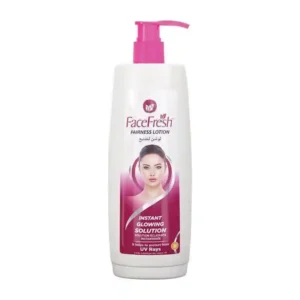
- Fairness Lotion — shea in the middle of the list. Petrolatum and beeswax are third and fifth.
- Gold Plus 4 in 1 Beauty Pack — shea and cocoa butter together in the cream, behind petrolatum, beeswax, ozokerite and pola wax. This is the richest use of shea in the range.
- Men Beauty Soap — shea eleventh. In a bar there is nothing to seal, so shea's job here is to slow the lather and soften the cleanse, which its own page explains.
- Yusma Anti Marks Cream and Easy Fresh Anti Marks Cream — shea low on both lists, behind petroleum jelly and beeswax.
None of that is a criticism. It is how good moisturisers are built. The point of running the exercise is that once you can see it, a lotion selling itself entirely on shea starts to look like a lotion that has not told you what is in it.
Refined, unrefined, and what natural means on a lotion
A natural shea butter lotion is a phrase with no legal definition, so it is worth knowing what it usually signals.
Raw or unrefined shea is filtered mechanically. It keeps its nutty smell, its cream-to-grey colour, and the largest share of its minor compounds. Refined shea is deodorised and bleached, which makes it white, odourless and much easier to formulate into a pale, lightly fragranced lotion — at the cost of some of the fraction that made it interesting.
Neither is better in the abstract. Unrefined shea in a body butter is a genuinely different product. Unrefined shea in a fragranced white lotion would be a formulation problem, not a virtue. What matters more than either is the second question nobody asks: how much of it is in there. A lotion can be built on refined shea at fifteen per cent or on unrefined shea at half a per cent, and only one of those is a shea product.
Face Fresh does not declare which type or how much, in any product. Position on the list is the only clue available, and the section above gives it for all six.
Shea in a wash
Body washes with shea and natural oils are sold on the idea that some of the fat is left behind after rinsing. That can be true, but it depends on a specific class of ingredient — a refatting agent designed to survive the rinse — rather than on the butter itself.
One caution about our own range, and we would rather raise it than let you buy on it. The Yusma Moisturizing Body Wash lists an ingredient printed as Shea Bukthom Oil. That is not a recognised ingredient name. On the balance of probability it is sea buckthorn oil, which comes from a completely different plant and does a completely different job. Until the manufacturer confirms which it is, do not buy that wash for the shea. Buy it for the refatting agent it genuinely contains, which its own page explains properly.
Which Face Fresh product fits
- Genuinely dry body skin — the Face Fresh Body Lotion, which pairs shea with all three occlusives and two humectants. The 400ml is the one to buy if you are using it properly.
- The richest shea in the range — the cream in the Gold Plus 4 in 1 Beauty Pack, which carries shea and cocoa butter and no acids at all.
- A daily bar that does not leave skin tight — the Men Beauty Soap. Works on anyone.
- Dry skin on the face rather than the body — none of the above. See the dry skin page, which argues that how often you apply matters more than how rich the product is.
The limitation worth stating: shea is not high on any Face Fresh label. It is a real, working ingredient in six products and a supporting one in all of them. A brand that put shea second on the list would be selling you something different, and if that is what you want, you should buy it.
FAQs
Is shea butter good for very dry skin?
It helps, but it is not the ingredient doing the most. Shea softens and smooths; an occlusive such as petrolatum is what actually stops water escaping. Look for both on the label.
Will shea butter clog my pores?
On the body, rarely. On the face it is heavier than most people need and can contribute to congestion on skin already prone to it. Try it on a small area first.
Is raw shea butter better than what is in a lotion?
It is less processed, not necessarily better. Raw shea alone has no humectant and no water in it, so on genuinely dehydrated skin a well-built lotion usually outperforms the pure butter.
Can I use it if I have a nut allergy?
Shea comes from a tree nut, but the butter is very low in protein and reported reactions are rare. If your allergy is severe, ask your doctor rather than relying on a general answer.
Should unrefined shea smell nutty and slightly smoky?
Yes — that comes from the nut and the roasting step, and its absence usually means the butter has been deodorised. Neither is a quality signal on its own, only a processing one.
How is a shea body butter different from a shea lotion?
A butter is mostly fat with little or no water, so it is thicker and better on very rough patches. A lotion contains water, spreads further and suits whole-body daily use.
Does shea butter fade stretch marks?
It improves how skin feels and looks in general, which softens their appearance a little. It does not remove them, and nothing in a jar reaches the depth at which a stretch mark forms.
Where should I look for shea on an ingredient list?
Under Butyrospermum Parkii, which is its botanical name. Its position tells you roughly how much is there, and anything past about tenth is a supporting ingredient rather than a hero.
For dry body skin, the Face Fresh Body Lotion is the one in this range where shea is properly supported. Apply it on damp skin, twice a day.