Product categories
- Brands (58)
- Easy Fresh (9)
- Face Fresh (37)
- Yusma (12)
- Hair Care (1)
- HAIR OILS (1)
- Shop by Concern (53)
- Acne & Pimples (22)
- Dark Circles (7)
- Dark Spots & Pigmentation (34)
- Dull Skin & Glow (37)
- Freckles (3)
- Open Pores & Texture (14)
- Sagging & Skin Firmness (8)
- Scars & Stretch Marks (4)
- Uneven Skin Tone (26)
- Wrinkles & Anti-Ageing (20)
- Shop by Skin Type (57)
- Acne-Prone Skin (13)
- Combination Skin (28)
- Dry Skin (19)
- Mature Skin (6)
- Oily Skin (17)
- Sensitive Skin (9)
- Skincare (57)
- Skincare ingredient (54)
- Aloe Vera (19)
- Alpha Arbutin (24)
- Amla (1)
- Azelaic Acid (4)
- Collagen (5)
- Cucumber (2)
- Glutathione (15)
- Glycolic Acid (3)
- Hyaluronic Acid (19)
- Kojic Acid (20)
- Milk & Honey (10)
- Niacinamide (38)
- Retinol (3)
- Rice Water (1)
- Rose Water (4)
- Salicylic Acid (4)
- Shea Butter (6)
- Tea Tree Oil (4)
- Vitamin C (17)
- Vitamin E (25)
- Uncategorized (0)
Kojic Acid
Two different molecules are sold as kojic acid soap, and they do not behave the same way. One is kojic acid itself. The other is kojic acid dipalmitate, an ester version that is far more stable but slower off the mark.
Face Fresh makes bars containing each, so the choice is a real one. This page explains which is which, what kojic acid can and cannot do to a dark mark, and how to read the label before you buy.
Showing 1–16 of 20 resultsSorted by popularity
 Sale!9.99$
15.99$38% OffAdd to cart This product has multiple variants. The options may be chosen on the product page Sale!9.99$
16.99$41% OffAdd to cart This product has multiple variants. The options may be chosen on the product page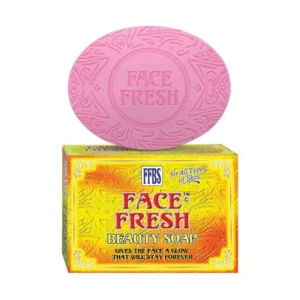 Sale!
Sale! Sale!
Sale! Sale!
Sale! Sale!
Sale!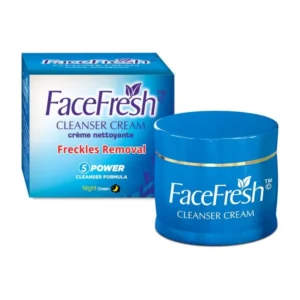 Sale!7.99$
13.99$43% OffAdd to cart This product has multiple variants. The options may be chosen on the product page Sale!9.99$
16.99$41% OffAdd to cart This product has multiple variants. The options may be chosen on the product page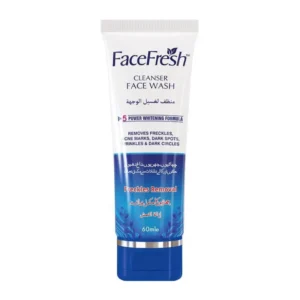 Sale!
Sale!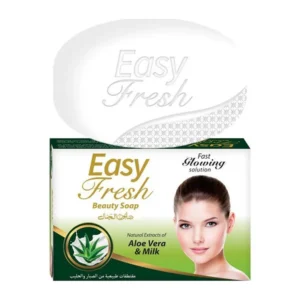 Sale!
Sale!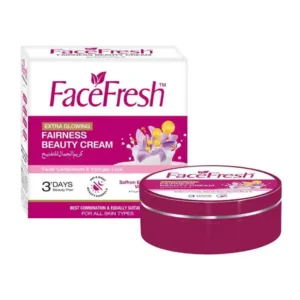 Sale!
Sale!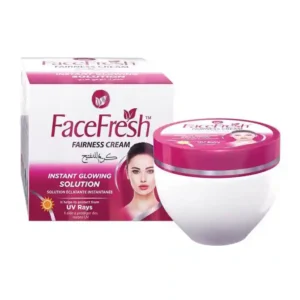 Sale!9.99$
15.99$38% OffAdd to cart This product has multiple variants. The options may be chosen on the product page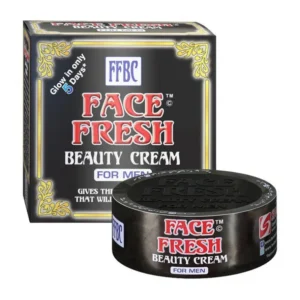 Sale!
Sale! Sale!
Sale! Sale!
Sale!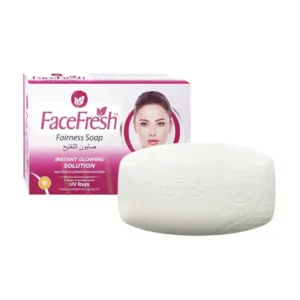 Sale!
Sale!
The two forms, and how to tell them apart
Free kojic acid is water-soluble and unstable. Light and air oxidise it, which is why a bar containing it often deepens slightly in colour over a few weeks in a warm bathroom. That is the ingredient reacting, not the bar spoiling. The Face Fresh Beauty Soap is the one bar in the range that lists kojic acid in this free form.
Kojic acid dipalmitate is the same molecule with two fatty acid chains attached. Those chains make it oil-loving and much steadier — it survives heat, light and time in a way the free acid does not. Skin has to cut the chains off before the kojic acid inside can do anything, which is why it starts slower. The Face Fresh Fairness Soap uses this ester form, as does almost every cream in the range.
So the trade is stability against speed. Neither is better in the abstract. What matters is the format it is sitting in and how long you will realistically keep using it.
What kojic acid does to pigment, and what it does not
Kojic acid slows tyrosinase, the enzyme that begins melanin production. That is a preventive action, not a removing one. It reduces how much new pigment gets made from today onward; it has no effect on pigment already sitting in cells.
Marks you can already see fade only as those pigmented cells rise through the epidermis and shed, which takes weeks, not days. This is the single most useful thing to understand before you start, because it explains why nothing looks different in week one and why stopping at week three wastes the whole effort.
It also explains the limitation nobody selling kojic soap for dark spots will state plainly: kojic acid cannot lighten your natural skin colour, and it should not be expected to. What it can do is make an uneven face look more even, by holding back the new pigment that keeps the unevenness topped up.
Why a soap is a difficult format for any brightening active
A bar is on your skin for roughly twenty to forty seconds before it goes down the drain. That is not long enough for a tyrosinase inhibitor to do the bulk of the work, and any page claiming otherwise is selling you the wrong expectation.
The real kojic acid soap benefits are reach and consistency, not power. A bar covers knees, elbows, underarms, the back of the neck and the backs of the hands — everywhere you would never spread a 23gm jar of cream. It also gets used twice a day without anyone having to remember to use it.
Treat the bar as the maintenance layer and a leave-on as the engine. On the face that means pairing it with something that stays on, which is where the Face Fresh Fairness Cream earns its place in the routine.
Before-and-after photos: what they actually show
Search results are full of kojic acid soap before and after images, and most of them are not evidence of anything. Wet skin reflects light differently from dry skin. A face photographed straight after washing is briefly flushed and looks more uniform. Change the window, the time of day or the phone, and you change the result more than eight weeks of soap would.
A real change over eight to twelve weeks is undramatic and looks like this: the darkest marks sit closer to the surrounding tone, the overall face reads as more even, and makeup needs less correcting. If a photo pair shows a shift larger than that, something other than kojic acid is responsible.
Judge your own progress in the same light, at the same time of day, roughly a month apart. Mirrors are worse than photographs at showing slow change, because you see your face every day.
Kojic acid in a face wash
A kojic acid face wash has the same contact-time problem as a bar, with one difference worth knowing. The Face Fresh Cleanser Face Wash carries kojic acid dipalmitate alongside salicylic acid, and the dipalmitate is oil-soluble sitting in a water-based wash — the surfactants are what keep it dispersed.
That combination suits skin dealing with marks left behind by spots rather than sun-driven pigmentation. If your unevenness came from breakouts, the wash is a reasonable cleansing step. If it came from years of sun, the leave-on matters far more than the wash.
Which Face Fresh product suits you
Kojic acid appears across most of the range. These five are where it does the most, and each answers a different question.
- Face Fresh Beauty Soap — the free-acid bar. Choose it if you want the faster-acting form and you are using it on face and body together. Twice daily, and expect the bar itself to darken slightly.
- Face Fresh Fairness Soap — the steadier bar. Choose it if you have had trouble with brightening products before. The ester form releases slowly, which usually reads as gentler on the skin.
- Face Fresh Fairness Cream — the leave-on that does the work. This is where hours of contact happen instead of seconds. Pea-sized amount at night, and it is the product that decides whether the routine works.
- Face Fresh Cleanser Cream — for specific marks. A leave-on aimed at post-spot marks rather than whole-face tone. Use it on the patches, not everywhere.
- Face Fresh Men Beauty Cream — for beard-area and post-shave unevenness. Formulated around skin that gets scraped every other day, which is its own kind of pigment trigger.
One thing no Face Fresh product does is protect you from the sun, and no bar or cream in this range carries a tested SPF. Kojic acid works against new pigment; unprotected daylight makes new pigment faster than any topical can slow it. A separate sunscreen is not optional here — it is the difference between the routine working and standing still.
Frequently asked questions
Is kojic acid dipalmitate weaker than kojic acid?
Not weaker, slower. It has to be broken down on the skin before it is active, so it starts later but stays stable in the product for much longer.
Can I use a kojic bar on my body every day?
Yes, most people tolerate daily use on arms, legs and back. Start once daily on the face for a fortnight and go to twice if there is no tightness or redness.
Why has my kojic soap changed colour?
Free kojic acid oxidises in light and air, so bars containing it deepen in tone over weeks. It is expected. Keep the bar dry between uses and out of direct sunlight.
Does kojic acid make my skin burn more easily?
It does not increase sun sensitivity the way an acid exfoliant does. It does make sun protection more important, because unprotected daylight replaces the pigment you are trying to reduce.
Can I use kojic acid alongside an exfoliating acid?
Yes, but not in the same step on the same night when you are starting out. Give your skin two weeks on kojic acid alone before adding anything that resurfaces.
Will it change my natural skin colour?
No. It cannot, and no product in this range is meant to. It reduces new pigment production, which evens out marks and patches against the tone you already have.
Is kojic acid safe to use while pregnant?
There is limited research either way, so most clinicians suggest pausing brightening actives during pregnancy. Ask your doctor, particularly if you are treating pregnancy-related pigmentation.
How long should I give it before deciding it is not working?
Twelve weeks of consistent daily use, with sun protection. Less than eight weeks tells you nothing at all, because the pigmented cells have not turned over yet.
If you are starting from scratch, the simplest honest routine is one bar and one leave-on: wash with a kojic acid soap morning and night, and use the cream at night. Give it three months and photograph in the same light. Browse the full range of kojic acid products and pick the format that fits where your marks actually are.