Product categories
- Brands (58)
- Easy Fresh (9)
- Face Fresh (37)
- Yusma (12)
- Hair Care (1)
- HAIR OILS (1)
- Shop by Concern (53)
- Acne & Pimples (22)
- Dark Circles (7)
- Dark Spots & Pigmentation (34)
- Dull Skin & Glow (37)
- Freckles (3)
- Open Pores & Texture (14)
- Sagging & Skin Firmness (8)
- Scars & Stretch Marks (4)
- Uneven Skin Tone (26)
- Wrinkles & Anti-Ageing (20)
- Shop by Skin Type (57)
- Acne-Prone Skin (13)
- Combination Skin (28)
- Dry Skin (19)
- Mature Skin (6)
- Oily Skin (17)
- Sensitive Skin (9)
- Skincare (57)
- Skincare ingredient (54)
- Aloe Vera (19)
- Alpha Arbutin (24)
- Amla (1)
- Azelaic Acid (4)
- Collagen (5)
- Cucumber (2)
- Glutathione (15)
- Glycolic Acid (3)
- Hyaluronic Acid (19)
- Kojic Acid (20)
- Milk & Honey (10)
- Niacinamide (38)
- Retinol (3)
- Rice Water (1)
- Rose Water (4)
- Salicylic Acid (4)
- Shea Butter (6)
- Tea Tree Oil (4)
- Vitamin C (17)
- Vitamin E (25)
- Uncategorized (0)
Retinol
Retinol before or after serum is one of the most-asked questions in skincare and one of the hardest to answer, because ‘serum’ is not a formulation category. It is a marketing word for anything thinner than a cream.
A hyaluronic acid serum, a vitamin C serum and an oil-based peptide serum have almost nothing in common, so no single answer covers all three. There is one rule that does always hold, and two things that matter far more than order.
Showing all 3 resultsSorted by popularity
 Sale!
Sale!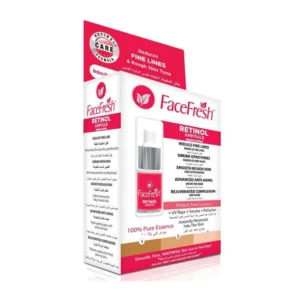 Sale!
Sale!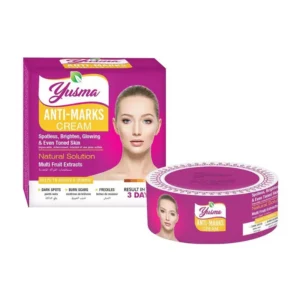 Sale!
Sale!
The rule that always holds
Apply in order of consistency: water-based first, oil-based last. Anything thin and watery goes on before anything thick and creamy, because a heavy layer forms a barrier the thinner product cannot cross afterwards.
For retinol specifically, add one condition. It goes on clean, dry skin — not damp. Damp skin absorbs more of it, which sounds good and is actually the fastest route to the flaking and stinging that make people give up in week two. Wait two or three minutes after washing.
So the practical order for most people is: cleanse, wait, retinol, then everything else. A watery hydrating serum can go first if your skin runs dry, applied and allowed to sink in before the retinol goes on top. What should not happen is retinol going on last, over a cream, where very little of it reaches skin at all.
How much, and how often — the questions nobody asks
Order is a small variable. Frequency and quantity are the large ones, and almost every retinol failure comes from getting these wrong rather than from layering in the wrong sequence.
The right amount for a whole face is roughly a pea, or two to three drops of an ampoule. More does not work faster; it produces irritation, and irritated skin gets a break from retinol, which means the total dose over a month goes down rather than up.
Start twice a week for a fortnight, then every other night for a month, then nightly if your skin is comfortable. Plenty of people never get past every other night and see perfectly good results. Consistency over a year beats intensity over a fortnight, every time.
Retinol serum or retinol cream
The retinol serum vs cream question is really a question about buffering. A serum base delivers retinol quickly and with little to slow it down. A cream base holds it in an emulsion with oils and waxes, which releases it more gradually and is more comfortable for skin that reacts.
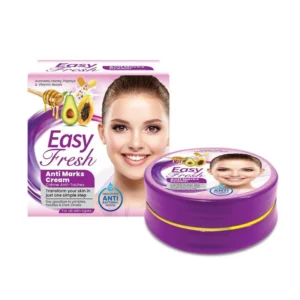
In this range the split is clean. The Face Fresh Retinol Ampoule is the serum route — five millilitres, and niacinamide placed deliberately above the retinol on the list to steady the barrier. The Face Fresh Yusma Anti Marks Cream and the Face Fresh Easy Fresh Anti Marks Cream are the cream route, where retinol sits in a rich base alongside other actives.
Neither of the two creams declares a retinol percentage, and neither does the ampoule. No Face Fresh product does. That means you cannot compare strengths on paper, and the practical way to judge is by how your skin behaves in the first fortnight.
Vitamin C and retinol in the same routine
The old rule was that vitamin c serum and retinol must never meet, on the grounds that they need different pH levels. The chemistry behind that is real and the practical significance is small — most modern derivatives are stable at ordinary skin pH.
The better reason to separate them has nothing to do with chemistry. Both can irritate, and applying both at once means that when your skin objects you have no idea which one is responsible. Splitting them across morning and night is simply easier to troubleshoot.
Vitamin C in the morning under sunscreen, retinol at night, is the arrangement that suits both ingredients' strengths. It also solves the sun-sensitivity issue, since retinol makes skin more vulnerable to ultraviolet light and belongs at the end of the day rather than the start.
Building a routine with niacinamide and retinol
A skin care routine with niacinamide and retinol is the most reliable starting point for anyone new to retinoids, because niacinamide supports the barrier that retinol disturbs. The two are compatible and the pairing is deliberate in several Face Fresh formulas.
The simplest version has four steps at night: a gentle cleanser, niacinamide, retinol once your skin is dry, then a moisturiser to seal. The moisturiser is not optional — a retinoid without something occlusive over it is where most of the flaking comes from.
If your skin is reacting, the fix is not to stop. It is to sandwich: moisturiser, then retinol, then moisturiser again. That slows delivery considerably and lets skin that could not tolerate retinol at all build up to it over a couple of months. Our guidance on niacinamide covers the compatibility side in more detail.
Which Face Fresh product suits you
Three products contain retinol, and they are genuinely different starting points rather than three versions of the same thing.
- Face Fresh Retinol Ampoule — if you have used a retinoid before. The serum route, with niacinamide and squalane built in to soften the adjustment. Two or three drops, on dry skin, at night.
- Face Fresh Yusma Anti Marks Cream — for marks and texture together. Retinol in a cream base alongside azelaic and salicylic acids. A strong combination — start twice a week rather than nightly.
- Face Fresh Easy Fresh Anti Marks Cream — the gentler cream option. Retinol with coenzyme Q10, niacinamide and rosehip oil in a rich base. The slower of the two creams and the easier one to begin with.
Three limitations, and all three matter. Retinol is not recommended during pregnancy or breastfeeding — pause it and speak to your doctor. It does not belong on the eye contour, where the skin is thinnest and the product migrates. And it increases sun sensitivity while no Face Fresh product carries a tested SPF, which makes daily sunscreen from another source a condition of using it rather than a suggestion.
Frequently asked questions
Does retinol go on before or after a hydrating serum?
After, if the serum is watery — let it sink in first. Retinol should never go on over a cream or oil, because very little of it will reach the skin.
Why does my skin flake in the second week?
That is the adjustment phase, and it usually means too much too often. Drop to twice a week, use a pea-sized amount, and always moisturise over the top.
Can I put moisturiser on before retinol?
Yes, and it is a useful trick for reactive skin. Moisturiser, retinol, moisturiser again slows delivery and lets you keep using it rather than stopping.
Is a retinol cream weaker than a retinol serum?
Not necessarily weaker, but usually gentler. The oils and waxes in a cream release the retinol more gradually, which suits skin that has reacted before.
How long until retinol does anything visible?
Texture and smoothness in about eight weeks. Marks and fine lines take three to six months of steady use. Anything faster than that is not the retinol.
Can I use retinol every night straight away?
Better not to. Twice weekly for a fortnight, then alternate nights, then daily if comfortable. Many people get excellent results without ever reaching nightly.
Should I stop retinol in summer?
No, but sunscreen becomes non-negotiable. Retinol at night and daily sun protection is the pairing; skipping the second while keeping the first is the worst combination.
What should I not use with retinol on the same night?
Exfoliating acids, at least while you are starting. Both resurface, and stacking them is how people end up with a compromised barrier and a fortnight off everything.
The honest advice is to start slower than you want to. Two nights a week, a pea-sized amount, moisturiser over the top, and reassess after a month. Look at the three retinol options and pick by whether you want a serum or a cream base — that decision matters more than the brand on the front.