Product categories
- Brands (58)
- Easy Fresh (9)
- Face Fresh (37)
- Yusma (12)
- Hair Care (1)
- HAIR OILS (1)
- Shop by Concern (53)
- Acne & Pimples (22)
- Dark Circles (7)
- Dark Spots & Pigmentation (34)
- Dull Skin & Glow (37)
- Freckles (3)
- Open Pores & Texture (14)
- Sagging & Skin Firmness (8)
- Scars & Stretch Marks (4)
- Uneven Skin Tone (26)
- Wrinkles & Anti-Ageing (20)
- Shop by Skin Type (57)
- Acne-Prone Skin (13)
- Combination Skin (28)
- Dry Skin (19)
- Mature Skin (6)
- Oily Skin (17)
- Sensitive Skin (9)
- Skincare (57)
- Skincare ingredient (54)
- Aloe Vera (19)
- Alpha Arbutin (24)
- Amla (1)
- Azelaic Acid (4)
- Collagen (5)
- Cucumber (2)
- Glutathione (15)
- Glycolic Acid (3)
- Hyaluronic Acid (19)
- Kojic Acid (20)
- Milk & Honey (10)
- Niacinamide (38)
- Retinol (3)
- Rice Water (1)
- Rose Water (4)
- Salicylic Acid (4)
- Shea Butter (6)
- Tea Tree Oil (4)
- Vitamin C (17)
- Vitamin E (25)
- Uncategorized (0)
Salicylic Acid
A pharmacy carries salicylic acid cream at forty per cent for hard skin on a heel and at two per cent for a spot on a chin. Same acid, same three words on the box, two products that should never be swapped.
That is not a detail. It is the single most useful thing to know before you buy, and the search results for this phrase mix the two freely. This page separates them, explains what salicylic acid actually does to skin, and says which end of the range Face Fresh sits at.
Showing all 4 resultsSorted by popularity
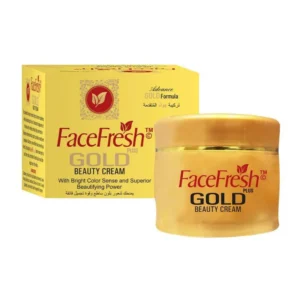 Sale!9.99$
16.99$41% OffAdd to cart This product has multiple variants. The options may be chosen on the product page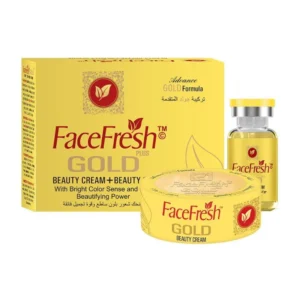 Sale!
Sale!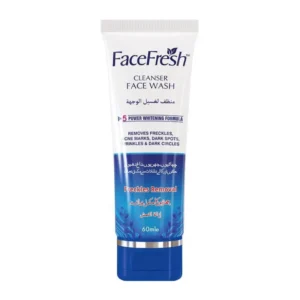 Sale!
Sale!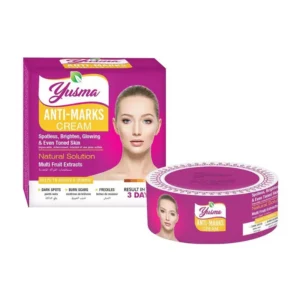 Sale!
Sale!
What salicylic acid does
Salicylic acid is a beta hydroxy acid. Its defining property is that it dissolves in oil, which is why it can travel down into a pore full of sebum instead of sitting on the surface the way a water-loving acid does. Our Gold Plus Beauty Cream page works through that mechanism in detail and there is no point repeating it here.
Two consequences follow. It loosens the bonds between dead cells so they shed rather than pile up, and it settles the redness around a blocked pore, because salicylates are mildly anti-inflammatory in their own right. The second effect is faster than the first and is why skin often looks calmer before it looks clearer.
The strength ladder
Concentration changes what salicylic acid is for. This is roughly how it maps, and it is worth reading before you order anything online.
- 0.5 to 2 per cent — face. Cleansers, leave-on lotions, spot products. Aimed at blocked pores, blackheads and the marks left behind. This is the only range that belongs on facial skin without supervision.
- 3 to 6 per cent — body and thickened patches. Back, chest, upper arms, keratosis pilaris. Usually a lotion or cream, sometimes prescribed.
- 10 to 17 per cent — feet, elbows, callus. Sold as a cream, gel or plaster. Softens genuinely thickened skin. Will cause stinging, whitening and peeling on the face.
- 17 to 40 per cent — wart and corn removers. These are medicines. They are designed to destroy tissue, they carry occlusion instructions and a maximum treatment period, and they are not skincare in any sense.
The gap between the top and bottom of that ladder is a factor of eighty. A cream that softens a heel will chemically burn an eyelid. Read the number before the brand.
What a salicylic acid face cream is for
A salicylic acid face cream sits at the bottom of that ladder and does a narrow job well: it keeps pore openings clear over hours rather than seconds, which a wash cannot do because it goes down the drain.
Where it earns its money is on the flat brown marks left after a spot has healed, and on the rough, bumpy texture across a chin or forehead that is not quite acne. Where it disappoints is on an active, painful, deep spot — that is inflammation below the level a mild acid reaches, and no leave-on cream at two per cent will shorten it much.
Face Fresh does not make a dedicated salicylic acid face cream. What we make is the Gold Plus Beauty Cream, a tone cream that contains salicylic acid alongside glycolic and azelaic acid, and the Yusma Anti Marks Cream, where salicylic acid sits behind a retinol. Both are multi-active creams that happen to include it, not single-acid products, and you should buy them for what they are.
Where salicylic acid sits in Face Fresh products
Three products in the range contain it, and the position on each list tells you something.
- Gold Plus Beauty Cream — eighth of twelve, behind glutathione, arbutin and kojic acid dipalmitate. A leave-on, so contact time is long. This is the one to use if salicylic acid is what you are after.
- Yusma Anti Marks Cream — mid-list, behind niacinamide and azelaic acid, with retinol further down. Aimed at marks rather than at blockage.
- Cleanser Face Wash — fifteenth of eighteen, below the preservative. Rinsed off. Useful, but its own page is honest that a wash is not where this acid does its real work.
No Face Fresh product prints a salicylic acid percentage, which means nobody can tell you where on the ladder these sit. Formulation convention and the position on the list both point to the low, facial end, and the products behave that way in use — but that is inference, not a declared figure, and we would rather you knew that.
Who should be careful: the aspirin question
Salicylic acid is chemically related to aspirin, and a meaningful amount of it can be absorbed through skin if you use a strong product over a large area. Four situations are worth flagging.
- Aspirin or salicylate allergy. Uncommon, but if you have one, ask a pharmacist before using any salicylic product on more than a small patch.
- Pregnancy. Low-strength facial use is generally considered fine; whole-body or high-strength use is usually advised against. Check with your doctor rather than a comment thread.
- Children. Salicylates are avoided in children with viral illness for reasons unrelated to skincare, and strong topical products are not for young skin regardless.
- Large areas at once. Back, chest and both legs in a single application is where absorption stops being theoretical. Treat a region at a time.
Ordinary facial use of a low-strength product is not a risk anyone needs to worry about. The point is that strength and surface area multiply, and the ladder above is where that starts to matter.
Which Face Fresh product fits
- Blocked pores and rough texture you want treated overnight — the Gold Plus Beauty Cream, two nights a week to start, never on the same night as another exfoliant.
- Brown marks left behind after spots have gone — the Yusma Anti Marks Cream, which pairs salicylic acid with azelaic acid for exactly that job.
- A daily cleansing step you want to carry a little acid — the Cleanser Face Wash. Not a treatment; a sensible base.
- Active, painful, cystic acne — none of these. See a doctor. The acne and pimples page is honest about where our range stops.
The limitation worth stating plainly: Face Fresh makes nothing at callus or wart strength, and if that is what brought you here, a pharmacy is the right place rather than a skincare brand.
FAQs
Is salicylic acid cream the same as salicylic acid face cream?
Not necessarily. The unqualified term covers everything from a 2% facial product to a 40% wart remover. A salicylic acid face cream is specifically the low-strength end, made for facial skin.
Can I use a foot or callus cream on my face if I dilute it?
No. You cannot reliably dilute a formulated product at home, and the base is built for thick, hairless, non-facial skin. It will sting, whiten and peel facial skin.
How often should I use a leave-on salicylic product?
Start at two nights a week and build up only if there is no tightness, flaking or stinging. Most people settle at three or four nights and see no benefit from daily use.
Does it make skin peel?
At facial strength it usually causes light flaking in the first fortnight and then settles. Visible sheet peeling means the product is too strong for you or you are using it too often.
How do I fit salicylic acid and a retinoid into the same week?
Alternate nights, with a plain moisturiser on the nights you use neither. Four nights of activity a week is plenty. Only consider layering them once each has been tolerated alone for a month.
Is it safe on dark skin?
Yes, at facial strength and used gradually. The risk with any acid on deeper skin tones is irritation triggering more pigment, so the caution is about pace rather than about the ingredient.
Do the blocked pores come back if I stop?
Yes, within a few weeks. Salicylic acid keeps openings clear while you are using it; it does not change how much oil your skin produces, so stopping returns you to the starting point.
What is the difference between salicylic acid and glycolic acid?
Salicylic acid dissolves in oil and works inside pores. Glycolic acid dissolves in water and works across the surface. There is more on the second on our glycolic acid page.
If blocked pores and texture are the problem, the Gold Plus Beauty Cream is where salicylic acid does the most in this range. Start twice a week.