Free Shipping $99

+971-56842-8933
24/7 Customer service
Showing the single result
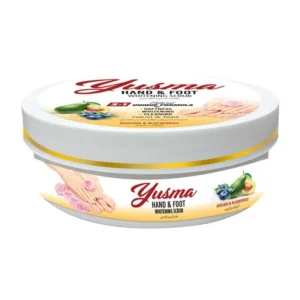
A hand scrub earns its place between two steps you probably already do: soap cleans, a scrub lifts what soap leaves behind — rough, thickened skin on palms, knuckles and heels — and a cream afterwards seals in the result. Face Fresh currently carries one scrub built for exactly that job: Yusma Hand & Foot Whitening Scrub, sized for hands and feet rather than the whole body.
One product, four things worth knowing before you use it.
Skip the scrub on cuts, sunburn, eczema patches and freshly shaved or waxed skin. If you have diabetes or reduced feeling in your feet, ask your doctor or a podiatrist before using any scrub there; the Yusma Hand & Foot Whitening Scrub 225gm page has a specific note on this.
An exfoliant is anything that helps dead skin come away, and there are three main types. They are not interchangeable.
Use one type per area at a time. A scrub and an acid on the same patch in the same week is the most common way people over-exfoliate.
The Yusma Hand & Foot Whitening Scrub 225gm is a cream-based scrub: petroleum jelly, beeswax and sorbitol carry the grains and leave a soft layer behind after rinsing, which is why heels feel smoother straight away. It contains no exfoliating acid and it is fragranced.
It will not clear a thick callus and it will not close a deep heel crack. Callus needs a foot file used on dry skin, and deep cracks need a rich cream used daily or a visit to a podiatrist. Our guide to cracked heels and rough hands covers both.
A scrub uses physical grains you rub in and rinse off; an exfoliating soap relies on its cleansers alone, with no added grit. A scrub generally does more in one use, which is also why it needs a lighter hand.
You can, but a body scrub is usually formulated for larger, less calloused skin. One sized and built for hands and feet tends to be gentler on knuckles and more effective on genuinely thickened heel skin.
Two to three times a week is a reasonable starting point for most people. Daily use tends to irritate skin faster than it improves it.
This category currently holds one scrub, with more planned over time. Check back, or see our whitening creams in the meantime for the next step in a hand and foot routine.
Not this one. Grains made for heels and knuckles are too rough for facial skin. For the face, a gentle acid product or a soft cleanser is a safer way to remove dead skin.
Before, and not on the same day if your skin is sensitive. A light scrub the day before helps prevent ingrown hairs. Scrubbing straight after shaving stings and can leave red bumps.
Ready to add a scrub to your routine? Yusma Hand & Foot Whitening Scrub has the full ingredient list, the safe way to use it, and a specific note for anyone with diabetes or reduced foot sensation.
WELCOME GIFT
Get 10% off your first order