Product categories
- Brands (58)
- Easy Fresh (9)
- Face Fresh (37)
- Yusma (12)
- Hair Care (1)
- HAIR OILS (1)
- Shop by Concern (53)
- Acne & Pimples (22)
- Dark Circles (7)
- Dark Spots & Pigmentation (34)
- Dull Skin & Glow (37)
- Freckles (3)
- Open Pores & Texture (14)
- Sagging & Skin Firmness (8)
- Scars & Stretch Marks (4)
- Uneven Skin Tone (26)
- Wrinkles & Anti-Ageing (20)
- Shop by Skin Type (57)
- Acne-Prone Skin (13)
- Combination Skin (28)
- Dry Skin (19)
- Mature Skin (6)
- Oily Skin (17)
- Sensitive Skin (9)
- Skincare (57)
- Skincare ingredient (54)
- Aloe Vera (19)
- Alpha Arbutin (24)
- Amla (1)
- Azelaic Acid (4)
- Collagen (5)
- Cucumber (2)
- Glutathione (15)
- Glycolic Acid (3)
- Hyaluronic Acid (19)
- Kojic Acid (20)
- Milk & Honey (10)
- Niacinamide (38)
- Retinol (3)
- Rice Water (1)
- Rose Water (4)
- Salicylic Acid (4)
- Shea Butter (6)
- Tea Tree Oil (4)
- Vitamin C (17)
- Vitamin E (25)
- Uncategorized (0)
Alpha Arbutin
Almost every alpha arbutin serum for dark spots is sold on a number — two percent, five percent, ten. That number is the least useful thing on the bottle.
Two things matter more: which arbutin it is, and how long you will keep using it. This page explains the difference between alpha and beta arbutin, why arbutin is slow by design, and what to look at instead of the percentage.
Showing 1–16 of 24 resultsSorted by popularity
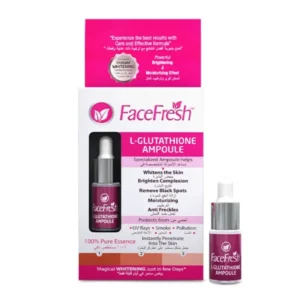 Sale!
Sale!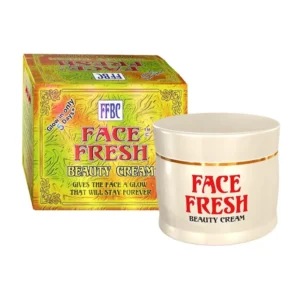 Sale!9.99$
15.99$38% OffAdd to cart This product has multiple variants. The options may be chosen on the product page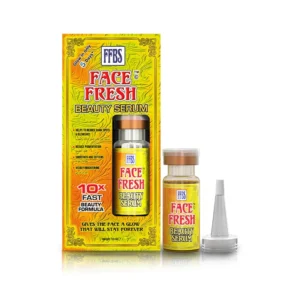 Sale!9.99$
15.99$38% OffAdd to cart This product has multiple variants. The options may be chosen on the product page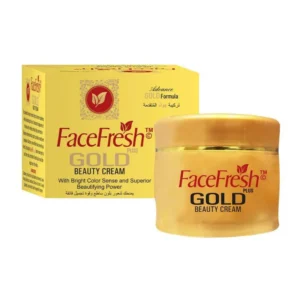 Sale!9.99$
16.99$41% OffAdd to cart This product has multiple variants. The options may be chosen on the product page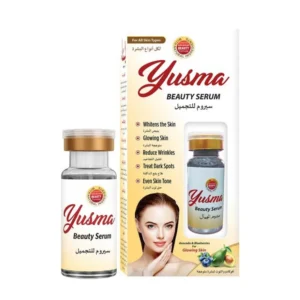 Sale!
Sale! Sale!
Sale!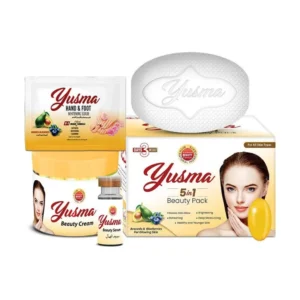 Sale!
Sale!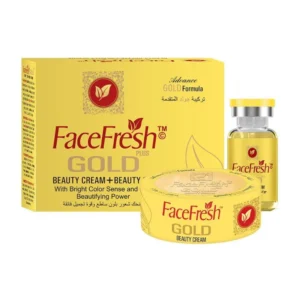 Sale!
Sale! Sale!
Sale!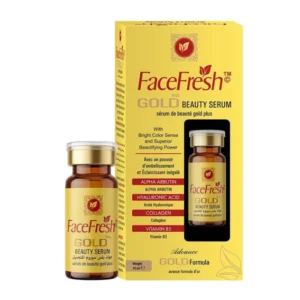 Sale!9.99$
16.99$41% OffAdd to cart This product has multiple variants. The options may be chosen on the product page Sale!9.99$
16.99$41% OffAdd to cart This product has multiple variants. The options may be chosen on the product page Sale!
Sale! Sale!
Sale!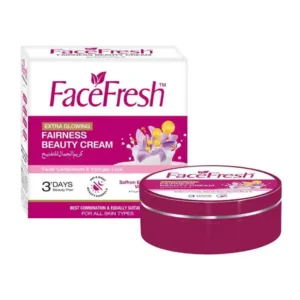 Sale!
Sale! Sale!5.99$
9.99$40% OffAdd to cart This product has multiple variants. The options may be chosen on the product page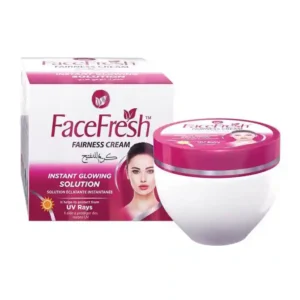 Sale!9.99$
15.99$38% OffAdd to cart This product has multiple variants. The options may be chosen on the product page
Alpha and beta arbutin are not interchangeable
Arbutin is a molecule from bearberry, and it comes in two orientations that look nearly identical on paper. Alpha arbutin and beta arbutin differ only in how one sugar bond is arranged — and that small difference changes how strongly the molecule blocks tyrosinase, the enzyme that starts pigment production.
Alpha is the more effective of the two at that job, and it is also the more expensive to make. Beta arbutin is common in cheaper formulations, and plenty of products simply write 'arbutin' on the label, which tells you nothing about which one you are getting.
Every Face Fresh product on this page lists alpha arbutin specifically, and that is the first thing worth checking on any brightening product you buy anywhere. A label that says only 'arbutin' has left out the part that matters.
Why the percentage is the wrong number to shop on
Searches for the best alpha arbutin serum return shortlists ranked almost entirely by concentration, as though the strongest number wins. Concentration is only one of three variables, and it is the one with the least room to move.
The other two are absorption and time. Arbutin has to reach the melanocytes sitting at the base of the epidermis to do anything, and how much gets there depends on the base it is dissolved in, whether the product sits on skin or rinses off, and whether anything occlusive goes over it. A well-formulated two percent that reaches its target beats a poorly formulated five that does not.
Face Fresh does not print an arbutin percentage on any product, and that is worth saying plainly rather than glossing over. What you can read instead is the position in the ingredient list — arbutin sits in the top half of the Face Fresh Beauty Serum and the Face Fresh Fairness Serum — and the format, which tells you how long it stays in contact with skin.
Arbutin is slow, and the slowness is the point
Arbutin is a sugar bound to hydroquinone, and skin releases that hydroquinone gradually as the bond breaks. Hydroquinone on its own is a fast, strong, prescription-controlled pigment inhibitor with a well-known irritation profile. Arbutin is the tempered version of the same idea.
That trade is deliberate: you give up speed and get tolerability. It is why arbutin appears in products meant for daily long-term use, and why nobody has ever built an overnight fix around it.
In practice, expect the first honest sign of change somewhere between six and ten weeks, and expect it to show on the newer marks first. Marks that have been there for years respond last, if at all.
Arbutin and melasma
An alpha arbutin serum for melasma is a reasonable thing to use and a poor thing to rely on alone. Melasma is driven substantially by hormones and by heat as well as light, which is why it flares in pregnancy, on the combined pill, and every summer regardless of what is on the shelf.
Arbutin will hold back some new pigment. It will not stop the hormonal signal underneath, and melasma that has been treated and cleared has a strong tendency to return the following season.
If the pattern on your face is symmetrical, sits across the cheekbones, upper lip or forehead, and darkens predictably with sun and heat, that is worth a conversation with a dermatologist rather than another serum. Our guidance on stubborn pigmentation covers how the three main causes behave differently and which is which.
Where it sits in a routine
Arbutin is water-soluble and unfussy. It goes on after cleansing, on skin that is still slightly damp, and before anything heavier. It layers comfortably under a cream and does not need buffering the way a retinoid does.
It is also stable next to most other actives in this range, including niacinamide and kojic acid, which is why so many Face Fresh formulas carry two or three of them together. The one thing worth avoiding is starting arbutin and an exfoliating acid in the same week — not because they conflict, but because if something stings you will not know which one caused it.
Which Face Fresh product suits you
Five products carry alpha arbutin. They differ by how concentrated the format is and how much of your face you are treating.
- Face Fresh Beauty Serum — the widest coverage. Comes in 3ml, 5ml and 10ml, so it is the easy one to trial before committing. Alpha arbutin sits first on its list, ahead of everything else.
- Face Fresh Fairness Serum — if you want vitamin E alongside. A lighter serum with arbutin and niacinamide together. Suits skin that finds richer formulas heavy in humidity.
- Face Fresh Fairness Cream — for whole-face tone rather than spots. A leave-on cream is the right format when the unevenness is general rather than a handful of defined marks.
- Face Fresh Gold Plus Beauty Serum — if fine lines are part of the picture. Arbutin alongside collagen and hyaluronic acid, aimed at skin dealing with tone and texture at the same time.
- Face Fresh Yusma Beauty Serum — for marks left by spots. Arbutin with witch hazel and tea tree, built around post-breakout marks rather than sun-driven pigmentation.
The limitation worth stating: arbutin acts on pigment that has not been made yet. It has no direct effect on a mark already sitting in your skin — that fades only as those cells turn over, which is why every honest timeline here is measured in months. If a product promises to erase existing dark spots quickly, it is not arbutin doing the talking.
Frequently asked questions
What is the difference between alpha and beta arbutin?
One sugar bond is arranged differently, and alpha is the more effective form at blocking pigment production. Labels reading only 'arbutin' do not tell you which you are buying.
Is alpha arbutin safer than hydroquinone?
It is gentler, because the hydroquinone is released slowly rather than applied directly. That also makes it considerably slower. Hydroquinone is prescription-controlled in most countries for good reason.
Can I use alpha arbutin every day?
Yes. It is designed for continuous daily use and does not need cycling or rest days the way an exfoliant or retinoid does.
Does alpha arbutin cause purging?
No. Purging comes from ingredients that speed up cell turnover. Arbutin does not do that, so anything that appears in the first fortnight is a reaction, not purging.
Should I use arbutin morning or night?
Either works. Night is simpler if you are layering several things, and it keeps your morning routine free for sunscreen, which matters more.
Why is my serum not working after a month?
A month is too early. Arbutin usually shows its first honest change between six and ten weeks, and only on newer marks. Give it a full twelve weeks before judging.
Can I use it on my neck and chest?
Yes, and both are worth treating, since sun-driven pigmentation there is common and often ignored. Skin on the chest is thinner, so start every other night.
Does arbutin work without sun protection?
Barely. Unprotected daylight makes new pigment faster than arbutin slows it, so the routine ends up standing still. Sunscreen is the part that decides whether it works.
If you want the simplest way in, start with a serum rather than a cream — it is cheaper to test, absorbs faster, and layers under whatever you already use. See the full serum and ampoule line-up and choose by where your marks actually are.