Product categories
- Brands (58)
- Easy Fresh (9)
- Face Fresh (37)
- Yusma (12)
- Hair Care (1)
- HAIR OILS (1)
- Shop by Concern (53)
- Acne & Pimples (22)
- Dark Circles (7)
- Dark Spots & Pigmentation (34)
- Dull Skin & Glow (37)
- Freckles (3)
- Open Pores & Texture (14)
- Sagging & Skin Firmness (8)
- Scars & Stretch Marks (4)
- Uneven Skin Tone (26)
- Wrinkles & Anti-Ageing (20)
- Shop by Skin Type (57)
- Acne-Prone Skin (13)
- Combination Skin (28)
- Dry Skin (19)
- Mature Skin (6)
- Oily Skin (17)
- Sensitive Skin (9)
- Skincare (57)
- Skincare ingredient (54)
- Aloe Vera (19)
- Alpha Arbutin (24)
- Amla (1)
- Azelaic Acid (4)
- Collagen (5)
- Cucumber (2)
- Glutathione (15)
- Glycolic Acid (3)
- Hyaluronic Acid (19)
- Kojic Acid (20)
- Milk & Honey (10)
- Niacinamide (38)
- Retinol (3)
- Rice Water (1)
- Rose Water (4)
- Salicylic Acid (4)
- Shea Butter (6)
- Tea Tree Oil (4)
- Vitamin C (17)
- Vitamin E (25)
- Uncategorized (0)
Showing the single result
 Sale!
Sale!
Hair oiling does three different jobs, and which one you get depends on when the oil goes on. Before a wash it reduces the friction and tangling that damage wet hair. On the scalp it softens flaking. On dry ends afterwards, a few drops flatten frizz. None of the three grows hair.
Three Ways to Use an Oil, and What Each One Is For
Before washing, on the lengths. This is the use with the most behind it. Wet hair swells, softens and loses strength, and most of the damage people blame on shampoo actually happens while they are handling hair in that state. A coat of oil through the mid-lengths and ends before you wet your hair reduces how much the strands drag against each other, so less cuticle is lifted in the shower and there is less tangling to pull through afterwards. Twenty minutes is enough. Overnight adds very little.
On the scalp, as a massage. Oil loosens dry flakes and makes them easier to wash away, and a few minutes of massage is genuinely pleasant. What it does not do is reach the part of the hair that is alive. The hair you can see is dead keratin, and the follicle that produces it is fed by blood, not by anything sitting on the surface of your scalp.
On damp or dry ends, after washing. This is the cosmetic use. A very small amount smooths down the lifted cuticle at the ends, which is what frizz and dullness actually are. The quantity here is a fraction of what you would use before a wash — start with two or three drops warmed between your palms.
One thing worth knowing about which oil suits which use. The oils studied for getting inside the hair shaft are vegetable oils, coconut in particular, because of the shape of the fatty acids in them. A mineral-oil-based oil behaves differently: it sits on the surface rather than entering the strand. That is still useful for the pre-wash and the frizz jobs, which are both surface jobs, and it washes out more easily. It matters less than most brands imply, but it is worth knowing which kind you have bought — the ingredient list on our own oil is printed in full on its page.
How Much, and Why Most People Use Far Too Much
The usual mistake is treating oil like conditioner. It is closer to a treatment: a little, in the right place, for a set length of time.
For a pre-wash on mid-length hair, enough to make the lengths look slightly damp rather than wet or dripping. If your hair is dripping, you have used several times what you needed and you will need two rounds of shampoo to get it out — and two rounds of shampoo take more away from your hair than the oil put back.
For frizz on dry hair, two or three drops for mid-length hair, more only if your hair is coarse or very long. Work it through the ends first and let whatever is left on your hands touch the mid-lengths. Never start at the roots.
Keep oil off the roots entirely if your hair is fine. Fine hair carries far less weight before it goes flat, and roots are where the flatness shows.
What a Hair Oil Will Not Do
It will not grow hair, and it will not stop hair falling. Shedding is decided inside the follicle, by hormones, health, medication, stress and genetics. If you are losing noticeably more hair than usual, or losing it in patches, that is a question for a doctor rather than for a shelf.
It will not repair split ends. A split cannot be rejoined. Oil makes the ends look darker, smoother and less obvious, which is a real cosmetic result and an honest one to promise, but the split is still there and will keep travelling up the strand until it is cut off.
It will not cure dandruff. Persistent flaking with itching and redness is usually a skin condition rather than dryness, and it is treated with a medicated shampoo, not an oil. There is one nuance worth knowing: the yeast involved in that kind of flaking feeds on certain fatty acids, so some people find heavy overnight oiling with a vegetable oil makes it worse rather than better. A mineral-oil-based product is not a food source for it. If your scalp is itchy, sore or shedding heavily, see a doctor first.
It will not change the colour of your hair back. Nothing applied to the outside of a strand restores natural pigment. Some hair oils are coloured, and some contain henna, which deposits colour on the surface — that is a dye effect, not a restoration.
Which Oil Fits Your Hair
We make one, and it is honest about what it is for.
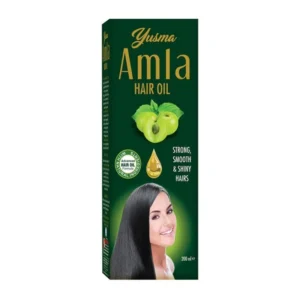
The 200 ml amla oil suits dry, coarse or frizz-prone hair and a scalp that feels tight and flaky. It is the kind of oil built for the pre-wash treatment and for a small amount on the ends afterwards. Full ingredient list, size and usage instructions are on its page.
If your hair is fine or goes flat quickly, use it only on the lengths and ends, never on the roots, and treat it as a pre-wash step you rinse out rather than something you leave in.
If it is your skin that is dry rather than your hair, oil is the wrong product entirely — the dry skin section covers what actually holds water in skin.
If you are here for hair removal rather than hair care, the creams and lotions for that are a separate part of the shop, and they work in a completely different way.
Questions About Using a Hair Oil
Is a pre-wash oil different from a leave-in one?
The bottle can be the same; the quantity and the purpose are not. A pre-wash treatment is a generous coat on the mid-lengths that you rinse away, and its job is protection while hair is wet. A leave-in is two or three drops on dry ends, and its job is appearance. Using leave-in quantities as a pre-wash does nothing, and pre-wash quantities as a leave-in looks greasy for days.
Can I leave a hair oil in overnight?
You can, but it adds very little. Most of what a pre-wash oil does happens in the first twenty to thirty minutes. Overnight mainly means more oil to wash out the next day, and so more shampoo. If you like doing it, cover your pillow and use less than you think.
Does hair oil belong on the scalp or only on the lengths?
The lengths get the benefit. The scalp gets comfort — flakes soften and massage feels good — but nothing on the surface reaches the follicle. If your scalp is oily to begin with, skip it entirely and treat the lengths only.
How much oil is right for mid-length hair?
Before a wash, enough to make the lengths look slightly damp. After a wash, two or three drops. If your hands still feel greasy after you have finished applying it, you have used too much and some of it is going to end up on your face and pillow.
Why does my hair look greasy for two days after oiling?
Almost always too much oil, too close to the roots, washed out with one pass of shampoo. Apply from the ears down, and wash twice on the day you take it out — once to lift the oil, once to actually clean.
Is oiling worth doing if my hair is fine or thin?
Yes, but only as a pre-wash step on the ends. Fine hair shows weight immediately, so anything left in will flatten it. Leave-in oils are better suited to coarse, thick or curly hair, where the extra weight is what people are looking for.